Why I’m Still My High School Weight at 40 (Thanks to Secrets Learned in China)

If you had been at my high school graduation and then magically bumped into me today—two kids, two decades, and countless school pickups later—you might probably pause, squint, and ask me what kind of witchcraft I’m practicing.
I’m 40 years old. I live in full-on mom life. I don’t track macros. I don’t count steps. And somehow, quietly and without drama, I’m still at the exact same weight I was at eighteen. I know what you’re thinking, and no, it’s not genes. Both of my parents continuously have struggled with their weight— as a child, as soon I was learning to count, I was learning to count calories.
When I started ballet, the horrible cycle started- starving then bingeing and then the guilt…. but I was young and active and somehow managed to keep a relatively healthy weight. But I was constantly wasting so much energy thinking about what/when/how much to eat and going into shame spirals when I overindulged (far too often). Had I continued this way, and after my hormones started adjusting in my late 20s, I would have been doomed to be a Weight Watchers lifetime member. But after graduating from university, I did something radically different, which was to move to China. And it turned all my eating and exercise habits upside-down.
So what’s the secret? No cleanse. No gym membership I feel guilty about. No "before and after" montage.
The real reason is much less glamorous—but far more sustainable:
I lived in China for over 15 years, and from the start, the lifestyle gently changed my body for the better.
Weight Loss Was Never the Goal
In the West, weight loss is something we do. We start, stop, restart, and narrate it loudly.
In China, staying slim isn’t framed as a project. It’s a byproduct of daily life.
People don’t announce they’re "being good." No one talks about cheat days. Food isn’t moralized. You just eat in a way that keeps your body comfortable—and then you repeat that for years.
After a decade and a half, those habits stopped being cultural curiosities and became muscle memory. And it starts at breakfast.
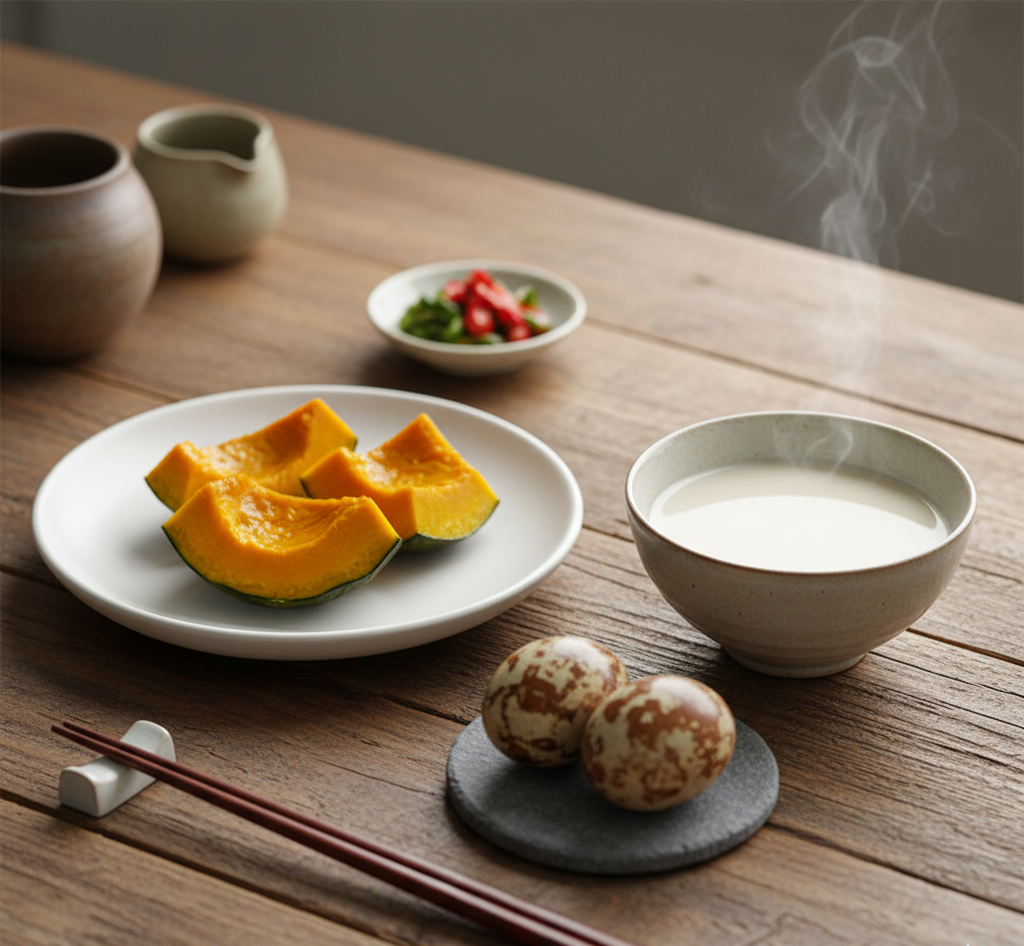
One of the quietest but most powerful shifts happened at breakfast. In China, breakfast isn’t sugar pretending to be fuel—it’s grounding, savory, and oddly comforting. Instead of pastries or cereal, mornings often start with steamed little pumpkins, roasted or boiled sweet potatoes, and tea eggs—eggs simmered for hours in soy sauce and spices until the flavor seeps all the way in. There might be a small dish of spicy pickled vegetables to wake everything up, something crunchy and sour that makes you feel instantly more alive. On the drink side, it’s rarely juice; it’s fresh, warm soy milk, sometimes slightly sweet, sometimes plain, always filling in a gentle way. None of it feels like “diet food,” but it keeps your blood sugar steady, your stomach calm, and your energy level surprisingly even until lunchtime. After years of eating this way, my body stopped expecting a sugar rush in the morning—and once that expectation was gone, so were the mid-morning crashes.
The Plate Is the Medicine
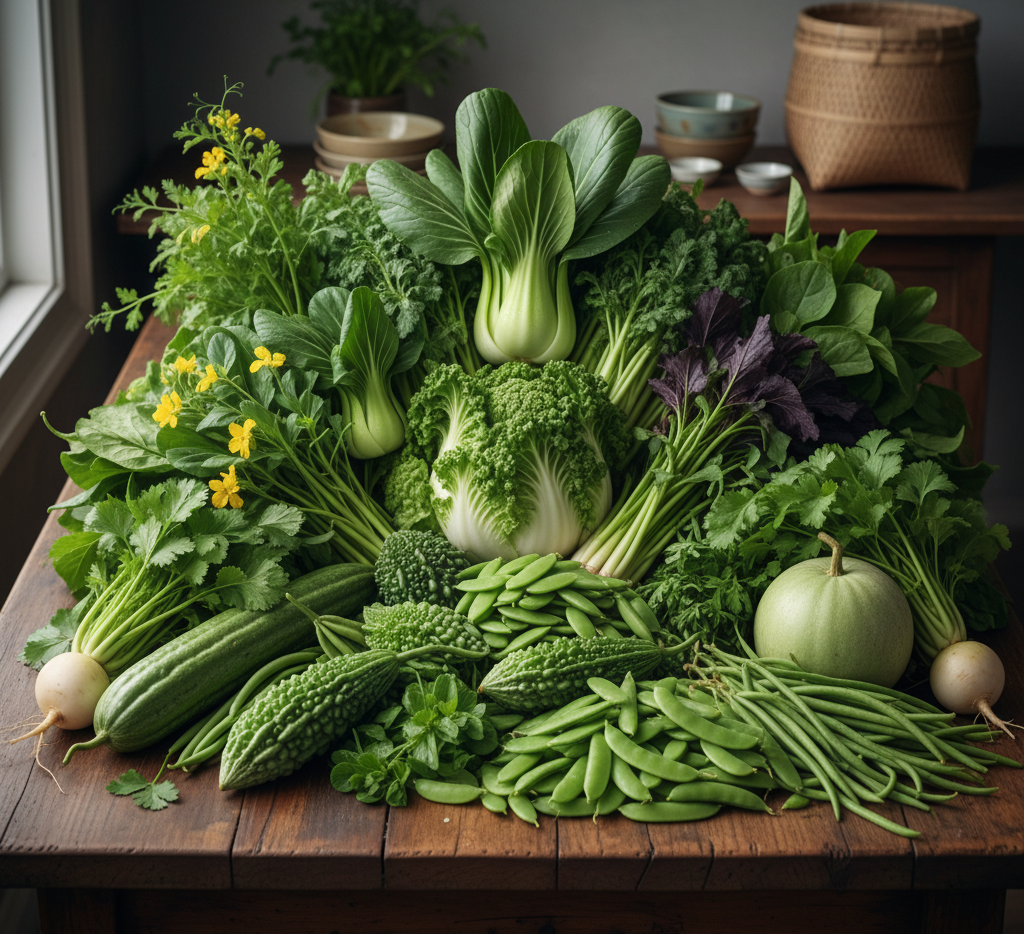
In the West, vegetables are often an obligation. In China, they’re the star.
My daily meals were built around vegetables I had never met before:
Bitter Melon (苦瓜)
Lotus Root (莲藕)
Winter Melon (冬瓜)
Napa cabbage
Water spinach
These aren’t filler foods. They’re high-fiber, deeply satisfying, and designed to make you feel good after you eat.
When 70% of your plate is vegetables and 30% is meat or carbs, you feel full without heaviness. Flavor comes from technique—high heat, garlic, vinegar—not excess.
Recipe to try:
👉 Simple Stir-Fried Bok Choy with Garlic
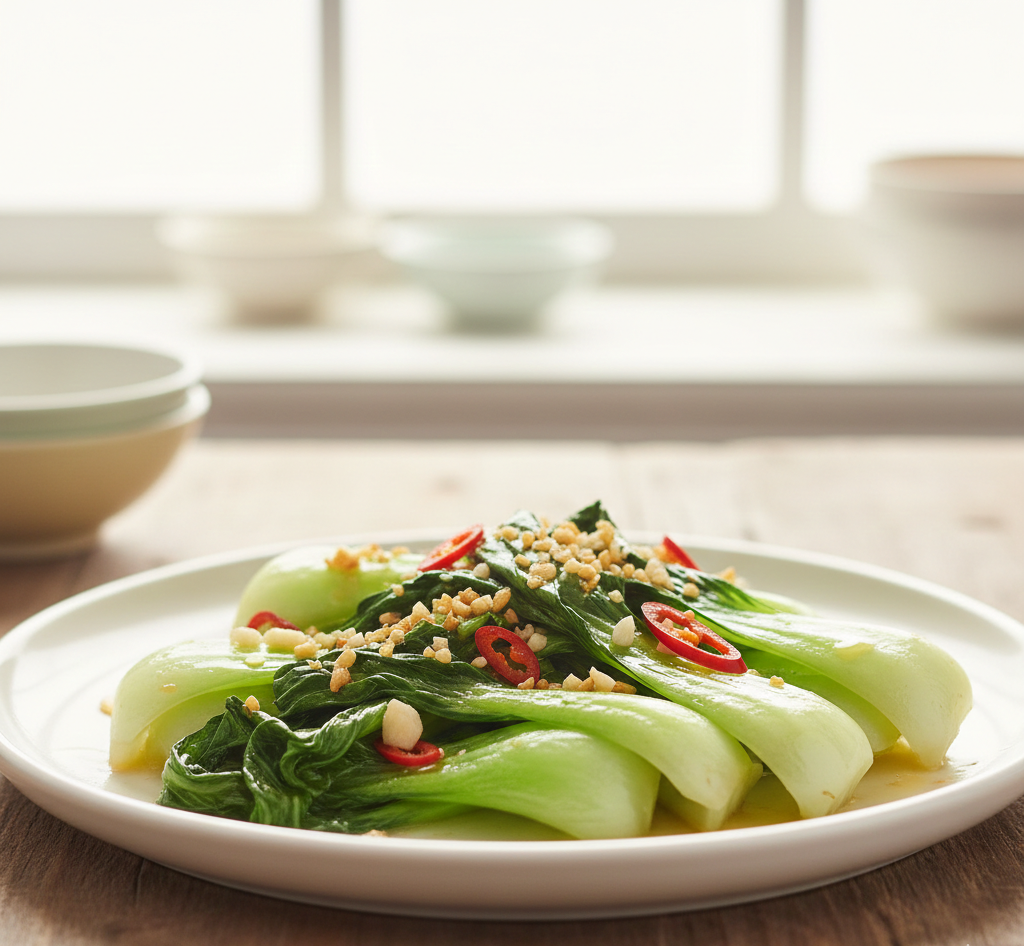
(with Metric + U.S. conversions)
Ingredients (Serves 2)
300–400 g bok choy
≈ 10–14 oz (about 5–6 loosely packed cups, chopped)3–4 cloves garlic, finely minced
≈ 1–1½ tablespoons minced garlic1½ tablespoons cooking oil
(peanut, vegetable, or canola oil)½–¾ teaspoon salt, to taste
Pinch of sugar (optional)
≈ ⅛ teaspoon1–2 tablespoons water (optional)
Preparation
Trim off the root ends of the bok choy and separate the leaves.
Wash thoroughly to remove dirt or sand. Drain well.
Finely mince the garlic.
Instructions
Heat the pan
Heat a wok or large skillet over medium-high heat until hot. Add the oil.Sauté the garlic
Lower heat slightly. Add garlic and stir-fry for 5–10 seconds until fragrant. Do not brown.Add bok choy
Increase heat to high. Add bok choy (stems first if large), tossing quickly.Season
Add salt and sugar. Stir well.
If the pan is dry, add 1–2 tablespoons water along the side of the pan.Finish
Stir-fry for 1–2 minutes until stems are tender-crisp and leaves are just wilted. Serve immediately.
Goodbye, Solo Salads
One of the biggest shifts for me was moving from individual plates to family-style eating.
Everything goes in the center. Everyone shares.
You eat slower because you’re talking. You take less because you’re sampling. Meals stretch to 45 minutes instead of 10.
By the time your body says “I’m full,” you’ve already stopped.
Easy shared dish:
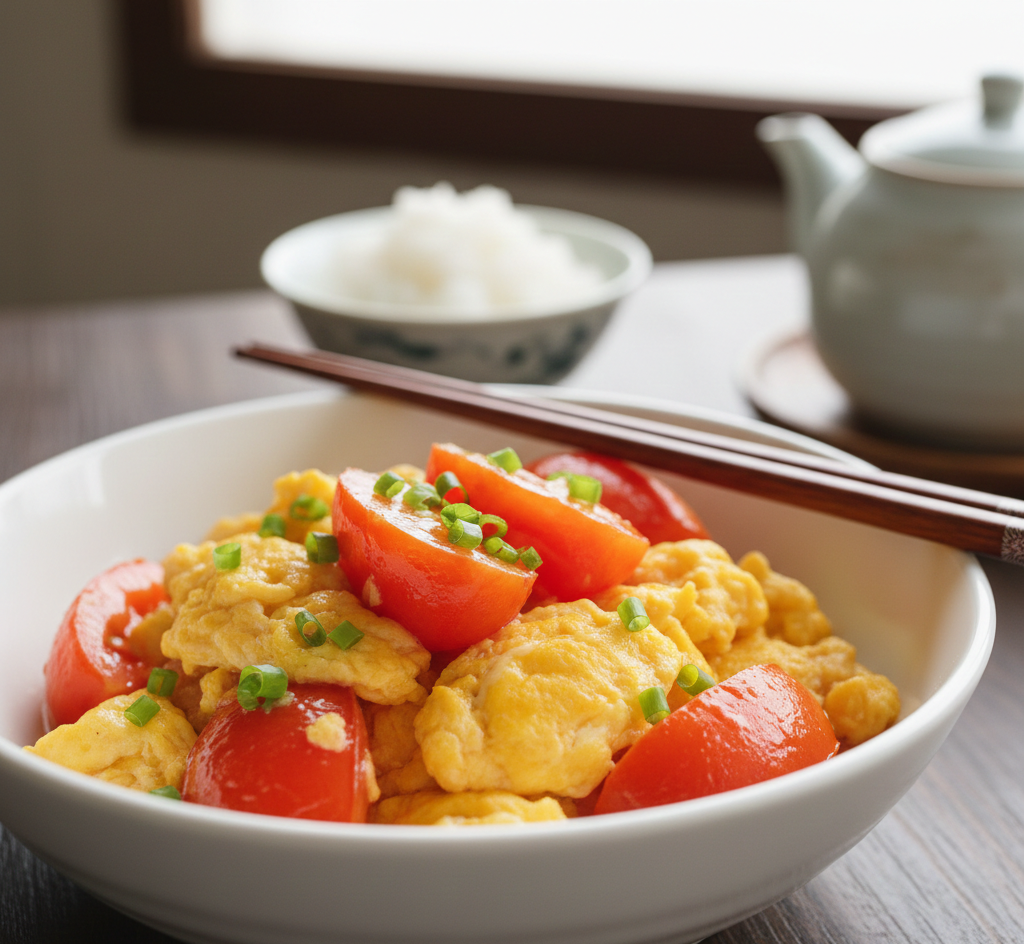
Chinese Tomato and Eggs (番茄炒蛋)
Ingredients (Serves 2)
3 medium tomatoes ≈ 400 g (≈ 14 oz, about 2½ cups chopped)
4 large eggs
2 tablespoons cooking oil, divided (peanut, vegetable, or canola oil)
½ teaspoon salt, divided
1 teaspoon sugar (balances the acidity of the tomatoes)
1–2 tablespoons water (optional, for juicier sauce)
Optional garnish: chopped scallions
Preparation
Cut tomatoes into wedges or medium chunks.
Crack eggs into a bowl, add ¼ teaspoon salt, and beat lightly until just combined.
Instructions
Cook the eggs
Heat 1 tablespoon oil in a wok or skillet over medium-high heat.
Pour in the eggs. Let them set slightly, then gently push and fold until just cooked but still soft.
Remove eggs from the pan and set aside.Cook the tomatoes
Add the remaining 1 tablespoon oil to the pan.
Add tomatoes and stir-fry over medium heat until they soften and release their juices (about 2–3 minutes).Season
Add remaining ¼ teaspoon salt and 1 teaspoon sugar.
Add 1–2 tablespoons water if you want more sauce.Combine
Return eggs to the pan. Gently fold everything together.
Cook for another 30–60 seconds until well combined and saucy.Serve
Taste and adjust seasoning. Garnish with scallions if using.
Serve hot with steamed rice.
Classic Chinese Cooking Notes
The eggs should be soft and fluffy, not browned.
Sugar is essential in Chinese versions—it balances the tomato acidity.
Some families add a few drops of sesame oil at the end, but it’s optional.
The Hot Water Thing (It’s Real)
Yes, it’s true. Hot water is serious business.
I swapped iced drinks for warm water and tea—especially Pu-erh—and the bloating I thought was just part of adulthood disappeared.
Warm liquids support digestion and reduce the snacky feeling that’s actually just thirst.
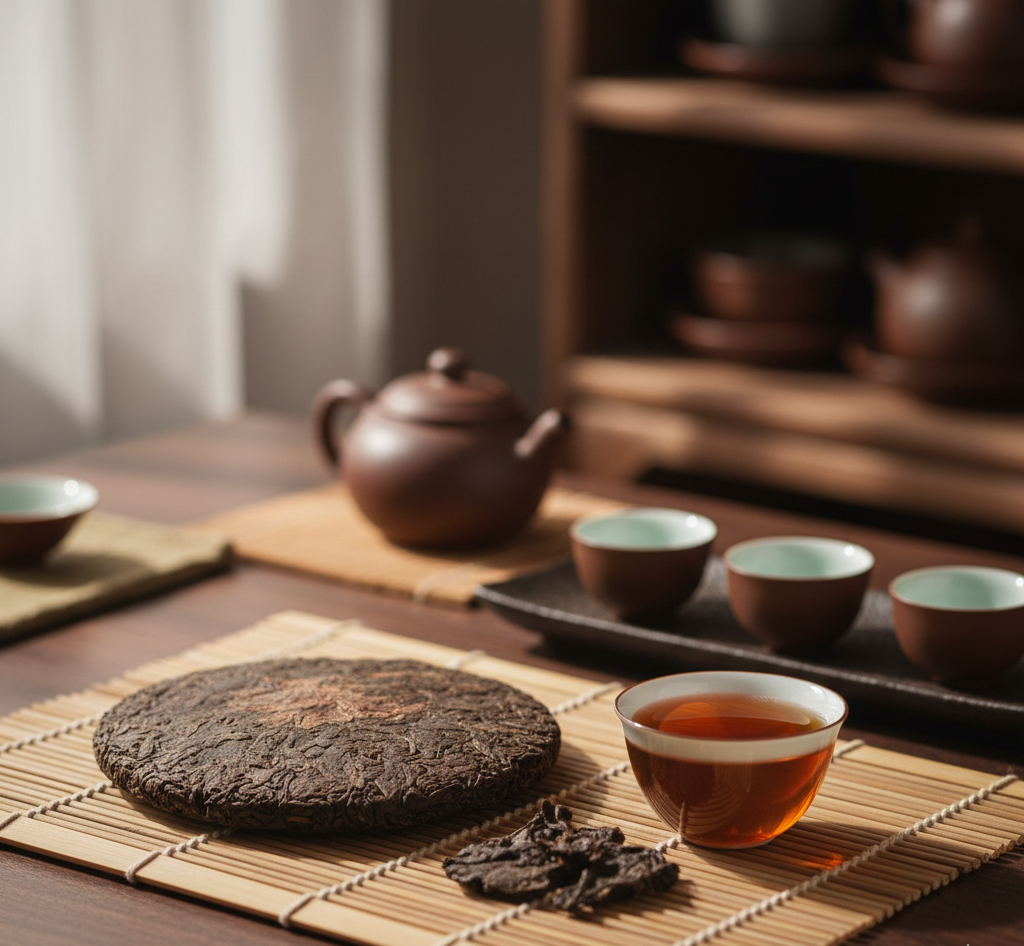
Try this:
Quick Pu-erh Brewing Guide
What You’ll Need
Pu-erh tea (raw sheng or ripe shou)
Teapot, gaiwan, or mug
Freshly boiled water
Tea-to-Water Ratio
5–7 g tea ≈ 1–2 teaspoons (loose) or 1 small chunk
100–120 ml water ≈ ⅓–½ cup
(For a mug: 3–4 g tea for 250 ml / 1 cup water)
Water Temperature
100°C / 212°F (full boil)
Pu-erh needs hot water to fully open the leaves.
Step-by-Step (Gongfu Style – Fast & Flavorful)
Rinse the tea (important)
Pour hot water over the leaves and immediately discard (3–5 seconds).
This wakes up the tea and removes dust.First infusion
Add boiling water and steep for:5–8 seconds (ripe / shou)
7–10 seconds (raw / sheng)
Next infusions
Increase steep time gradually:+3–5 seconds each round
Pu-erh can easily go 8–12 infusions.
Easy Western-Style Brewing (1 cup)
3–4 g tea
250 ml / 1 cup boiling water
Steep 2–3 minutes
Optional quick rinse first (recommended for ripe pu-erh)
Flavor Tips
Ripe (Shou) Pu-erh: earthy, smooth, cocoa/wood notes
Raw (Sheng) Pu-erh: fresh, floral, sometimes bitter when young
If bitter → use less tea or shorter steeps
If weak → use more tea, not longer time
Storage Tip (Bonus)
Store pu-erh away from light, moisture, and strong smells
Breathable storage (paper or clay) is best
Movement Without "Working Out”
I never went to the gym in China. I just walked.
Errands, transit, markets—it all added up. And every night after dinner came San Bu: a slow, social walk to help digestion.
No trackers. No goals. Just movement that felt good.
At 40, I’ve learned that consistency beats intensity every time.
The Honest Culture of Staying Slim
China is direct. If you gain weight, someone might mention it. It’s a kind of social pressure that is frowned upon in the US and that I found a bit offensive but got used it and I now see this kind of gentle teasing as a way to show care for others. This part of the culture serves as a reminder to pay attention to your health. And while you might see it as rude, let’s be honest, the average Chinese person is in much better shape than the average American so they might be on to something here.
While that can feel uncomfortable, it also means that healthy choices are socially normal. You’re not swimming upstream.
My China-Inspired Weekly Reset
1. The 2:1 Veggie Rule
Two vegetable dishes for every meat or carb. I grew up with one serving of vegetables with the meal as a kind of obligation and also as an afterthought. It was often a frozen bag of broccoli microwaved directly in its own bag…eww. But in China, vegetables are in every part of the meal.
👉 2 Recipes Ideas:
Napa Cabbage with Glass Noodles
Ingredients (Serves 2–3)
Napa cabbage (Chinese cabbage) 400 g (≈ 14 oz, about 6–7 cups, chopped)
Glass noodles (mung bean vermicelli) 50 g (≈ 1¾ oz, about 1 small bundle)
Garlic, minced 2 cloves (≈ 2 teaspoons)
Dried shiitake mushroom (optional) 1 piece, soaked and sliced
Cooking oil 1½ tablespoons
Light soy sauce 1 tablespoon
Salt ¼ teaspoon, or to taste
Sugar ¼ teaspoon
White pepper (optional) A pinch
Water or soaking liquid 3–4 tablespoons
Preparation
Soak glass noodles in warm water until soft (10–15 minutes). Drain and cut into shorter lengths.
Separate cabbage leaves and stems; slice stems thinly and chop leaves larger.
Mince garlic. Slice mushroom if using.
Instructions
Heat oil
Heat a wok or skillet over medium-high heat. Add oil.Aromatics
Add garlic (and mushroom if using). Stir-fry until fragrant.Cabbage stems first
Add cabbage stems. Stir-fry 1 minute until slightly softened.Add leaves + noodles
Add cabbage leaves, glass noodles, soy sauce, salt, sugar, and water.Finish
Toss and stir-fry 2–3 minutes until noodles absorb sauce and cabbage is tender but not mushy.
Season with white pepper if desired. Serve hot.
Tips
Glass noodles should be soft but not broken.
This dish should be moist, not dry—add a splash of water if needed.
Stir-Fried Lotus Root with Vinegar
Ingredients (Serves 2)
Fresh lotus root, peeled and sliced thin 300 g (≈ 10½ oz, about 2 cups sliced)
Garlic, sliced 2 cloves
Dried chili (optional) 1–2 pieces
Cooking oil 1½ tablespoons
Chinese black vinegar (Chinkiang) 1 tablespoon
Sugar ½ teaspoon
Salt ¼ teaspoon
Water 1–2 tablespoons
Preparation
Slice lotus root into thin rounds or half-moons.
Soak in water with a little vinegar for 5 minutes to prevent browning. Drain well.
Instructions
Heat oil
Heat wok or pan over medium-high heat. Add oil.Aromatics
Add garlic and dried chili. Stir briefly until fragrant.Stir-fry lotus root
Add lotus root. Stir-fry 2–3 minutes until just tender but still crisp.Season
Add vinegar, sugar, salt, and water. Toss quickly.Finish
Stir-fry another 30–60 seconds until glossy and well coated. Serve immediately.
Tips
Lotus root should stay crisp, not soft.
Add vinegar near the end to keep the flavor bright.
This dish is meant to be lightly sweet-and-sour, not heavily sauced.
2. Post-Dinner Walk
20–30 minutes. Slow. No headphones.
3. Warm Hydration Only
Carry a thermos. Drink tea before snacking.
4. Shared Plates at Home
Everything in the center. Smaller bowls.
5. Buy Food That Expires
Shop produce often. Cook simply. This one may be the most difficult for some people, so don’t get hung up on it. If you can’t make it work, that’s find. In Chinese medicine, refrigerators are generally considered bad medicine. They shop every day, don’t put fruits and vegetables in the refrigerator and cook for what they will eat, without leftovers. Over time, aim to shop for what you will eat today and tomorrow, not next Saturday. This takes a thoughtful adjustment to your habits which may be tough if you’ve never seen this lifestyle on a daily basis before. This is where it takes a bit of effort to adjust your shopping habits.
Final Thoughts
I didn’t chase thinness.
I changed my environment, learned new habits, and repeated them long enough that my body stopped resisting.
This isn’t about willpower.
It’s about rhythm.
And once you find the right one, your body remembers it—sometimes for life.
Going One Step Further
If learning about matcha green tea interested you, then you might also be curious about other aspects of Chinese culture. There are lots of interesting posts on this blog, but if you really would like to get to know a culture from the inside, I would recommend you begin to study Chinese. Sounds daunting? I thought so too, but I found that there are a lot of new methods to learn Chinese, even as an adult, that are not only a good workout for your memory and brain, but are also actually fun (no joke!). I decided to partner with my Chinese friend, Angel, the owner of MandarinHQ to offer my readers access to a lifetime course for learning Chinese. As it’s not subscription-based, you can take your time and learn at a pace that works for you. Follow this link here to get the course- your purchase will help me to keep this website active. From the bottom of my heart, thank you!